The Crofting Calendar
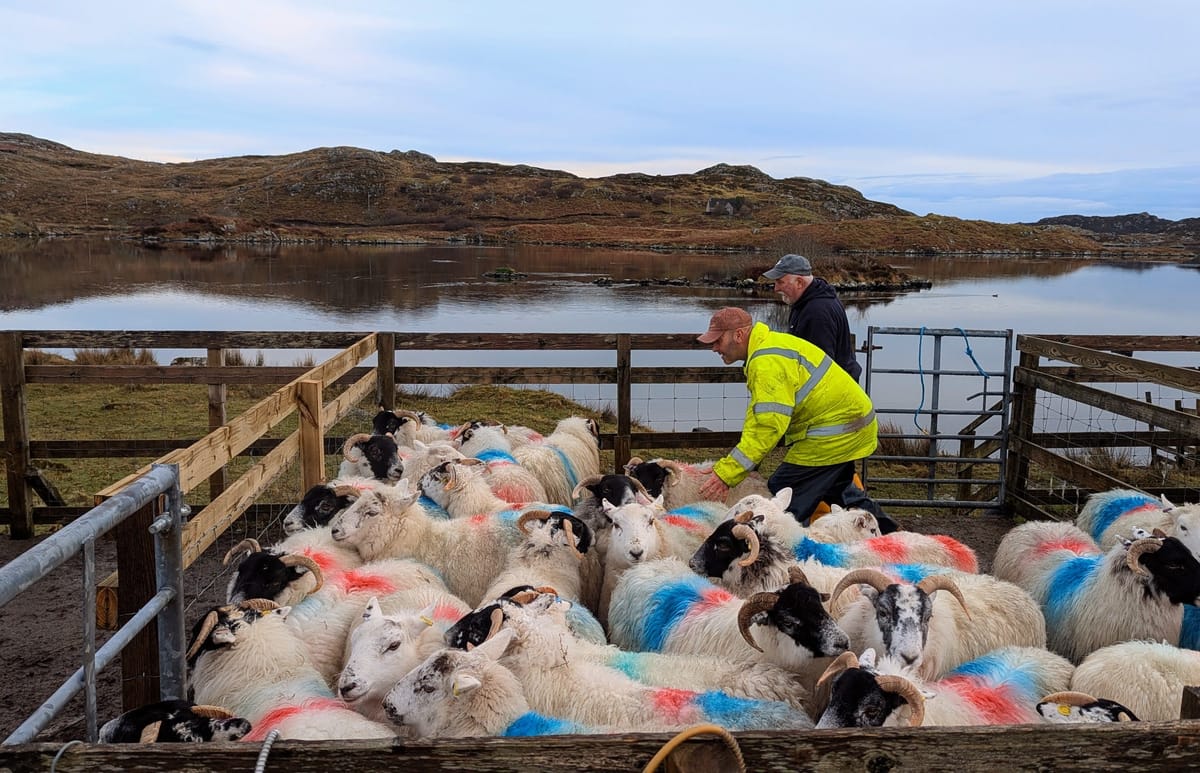
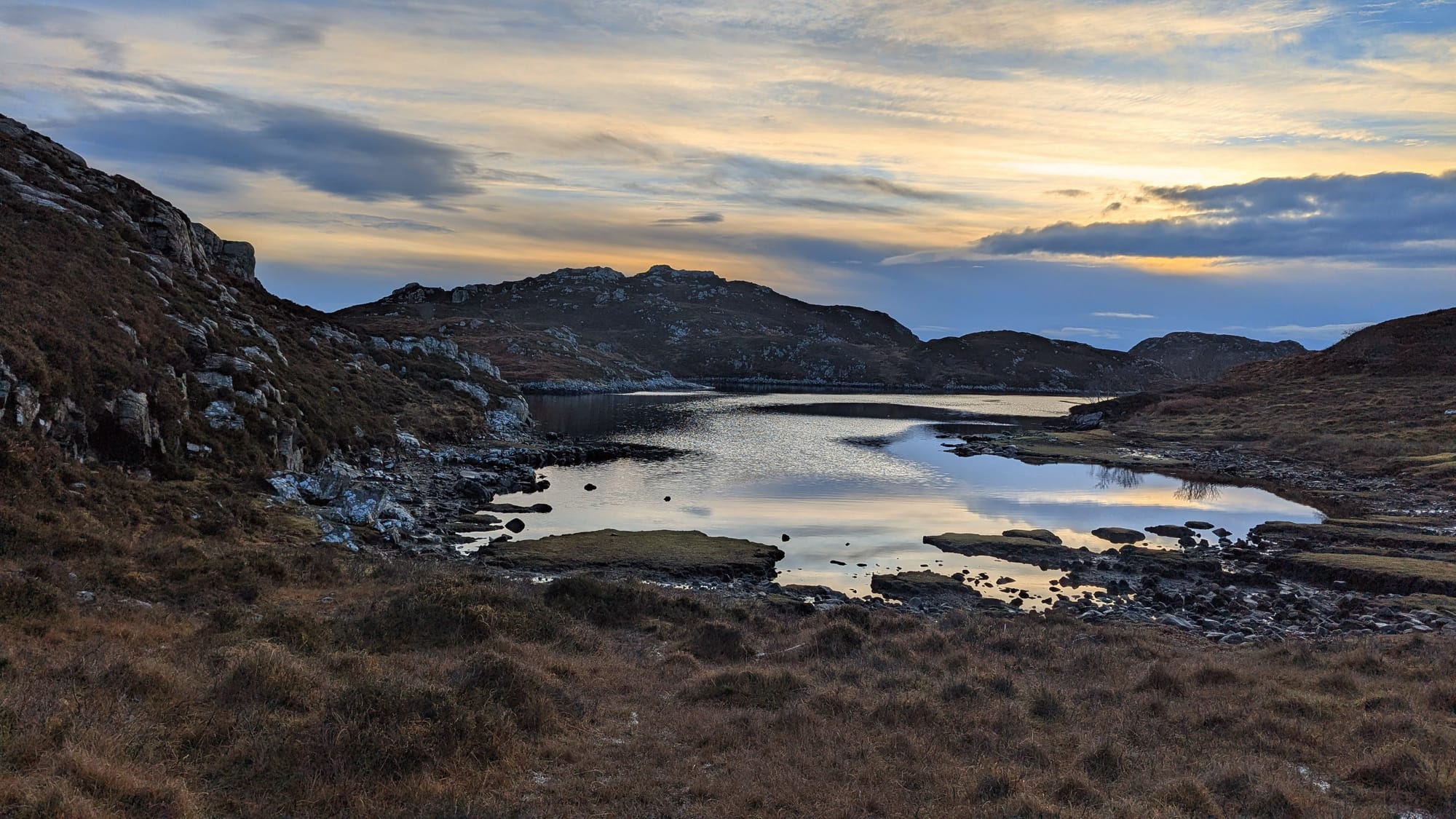
It began as a day of that mesmerising light you only truly know once you’ve spent a good bit of time in Lewis, and experienced it with your own eyes. It continues to have that ability to capture me, and stop me in my tracks. Our task for the day was to gather in the oisgean from ‘out the back’. Oisgean is the Gaelic for hoggs, or last years lambs, and they remain an oisg until their first shearing this summer. I just say as I hear, and the terms are used interchangeably dependent on whom the conversation is directed at. Out the back refers to an area of our common grazings, which lies to the ‘back’ of the village. Our common grazings are split, by natural geography or fencing, to three distinct areas each serving purposes at different times of the year. I’ll likely come back to this in more depth in future. A gather day for me is always a reset for the mind, when you cannot think of anything other than the task in hand, and it came at a much needed time for me after feeling bogged down in tech and meetings, seeping in to evenings and weekends, thus the necessary evil that comes from involvement with community work (balance is key, and mostly achievable, however at times things progress at pace in which extra time can’t be avoided.) The sheep are my way of coming back to what’s important…the land…the animals…the people, and connection in place. The oisgean had been out on the common grazings since late October, their first foray on to the moors alone. We gather them in now to allow this area of the grazings to recover, and bring them in to the crofts to begin to feed them actively each day with concentrate feed and hay. They will now remain on the crofts until the end of the retention period for the ewe hogg scheme (officially known as the Scottish Upland Sheep Support Scheme, which here remains very popular with crofters) at the end of March.
I titled this entry ‘The Crofting Calendar’ as this gathering marks another passing point in the crofting year. Since I began crofting I have become intrinsically linked with living to the natural rhythms of the seasons, and it happened almost without me noticing. Crofting is full of routine, and structure - you shear the flock, they go to the tup, the winter feeding months, the lambing season, cutting the peats, the set dates of opening and closing of different areas of the village for stock, which then relies on communal working by default. It’s also full of unpredictability! Anyone who keeps sheep knows I need say no more to this. Entering crofting, particularly from a non-agricultural background, there is so much to learn. Much of this knowledge resides only in the heads of the seasoned crofters, and with a diminishing youth actively partaking, I knew that I had a duty to take careful note of each bit of information they impart, often informally and seemingly not important at the time. You have to be willing to learn to adopt the ways, for they work for a reason, and have been done for generations, and village operations can (though not always) run like clockwork. So, hence The Crofting Year calendar became a working document (yes, yes there is a spreadsheet) of all the intuitive knowledge of those around me, which is slowly extracted as I learn, with each passing season. I never intended to have a written record, it was simply a way of keeping myself right and on track, wee reminders to myself of the upcoming tasks in each month ahead, be that dates and rough starting times for each gathering, which medications the sheep get at different times of year, when to turf and cut peats, a reminder to buy in feed or lambing supplies in advance, notes on planting tatties or picking rhubarb, when to order and buy the village hay supply for the winter, shearing notes (with my hand-drawn diagrams), deadlines for rural payments submissions, abattoir dates, when to cut rushes and prune fruit trees and bushes, to name but a few.
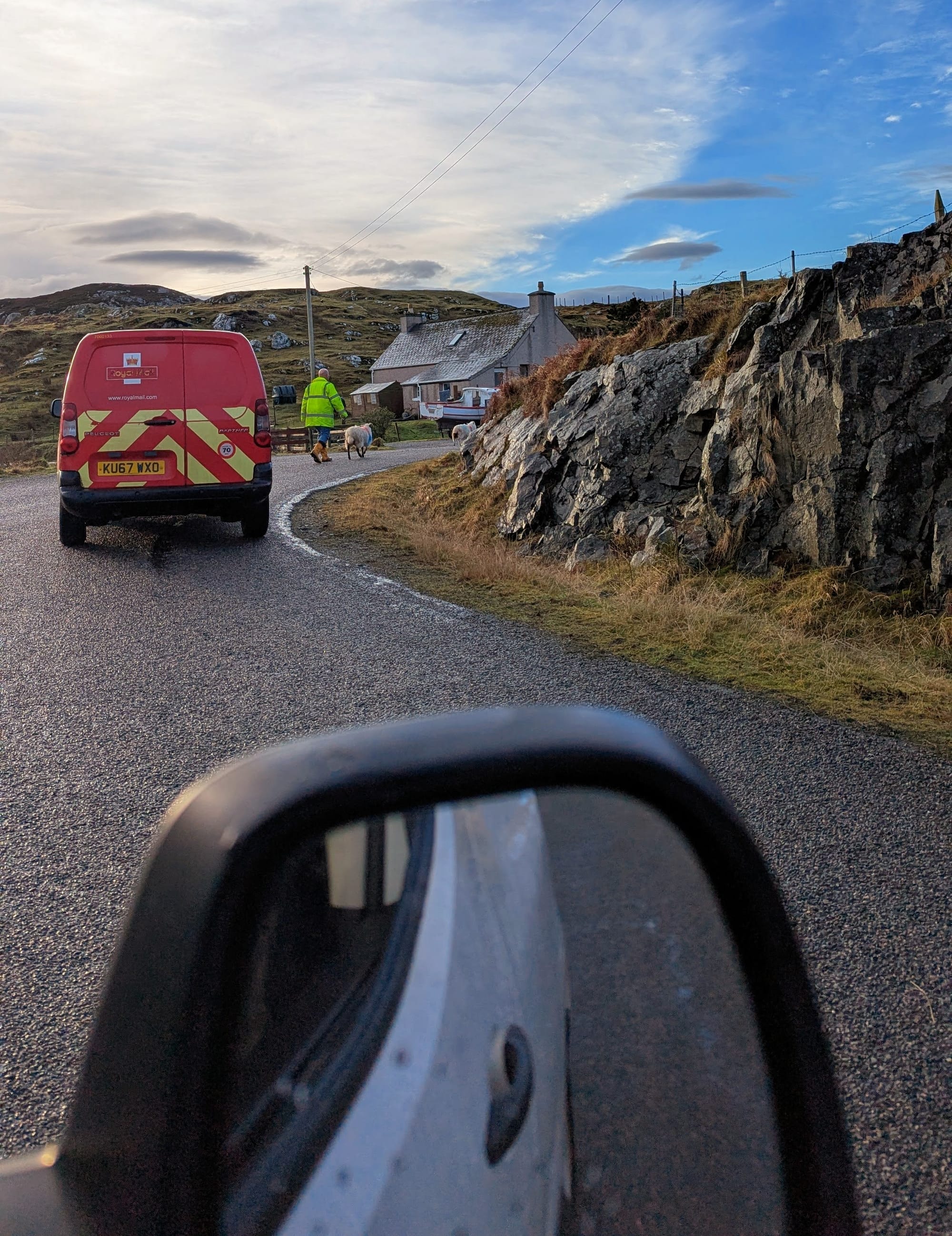
I can still remember the day, years back now, sat beside Murdo in the van, as we were stopped at a passing place (aka ‘siding’) on the one-track road chatting to the person in the car coming the opposite direction (these small moments of rural living still warm my heart, the absence of any rush) where he introduced me as his ‘apprentice’ and feeling a sense of pride, yet responsibility. Hopefully I have graduated from apprentice to qualified by now (I’d expect nothing less of a 10-year probation period mind you).
We have our fair share of laughs along the way, there is so much assumed knowledge in crofting and agriculture, in rural living in general (always put a rope around the brush head before you sweep your lum, learned that one *nearly* the hard way, thank me later), and many a faux pas to be had. I firmly sit my pride and ego at the side, and there it shall remain. As if it weren’t already a steep hill to climb, we’ve had the inevitably amusing moments of confusion with the mix of Gaelic and English terminology along the way. I heard and learned the Gaelic sheep names first (oisg, bliadhnach, dòdenach, mult - I don’t always know spellings yet, just the spoken terms, though mostly they themselves won’t know the Gaelic spelling, but that’s a part of history that is not mine to tell), and I still have to second think the English. And not to get started on days in the fank (sheep pen) where emotions are running high and I revert back to full Doric, rattling off at rapid speed, to Murdo's exasperation and amusement at understanding not a word - we laugh, we remain patient (or regain patience, more like).
Two areas I continue to cause frustration in with my significant knowledge gaps, things that just come with absolute ease to them, are the immediate identification of different crofters sheep markings and remembering which reseeding (apportionment) belongs to which crofter in a split second notice (often accompanied by instructions to open said gate, or some other action required on my part). So, I’ll take those away as homework points for going forward - study my village apportionment map, and match the crofter with the sheep markings - I feel a crofting popquiz could be appropriate here.
Much as I’ve skills to hone, when I chat to friends now from back in the northeast, and casually mention something or other I’ve been up to here which they struggle to fathom, I realise I’ve stepped over to this side and I’m embedded not only in place…but in mindset.
I didn’t know what to expect from this blog when I wrote my first post, but I’m grateful and overwhelmed by all the encouragement and sign-ups. Who knew that others were yearning, for non-writers of the world, ordinary folks stories. So I’ll stop overthinking where the comma goes, as each time I sit to write I realise how much I have yet to say.
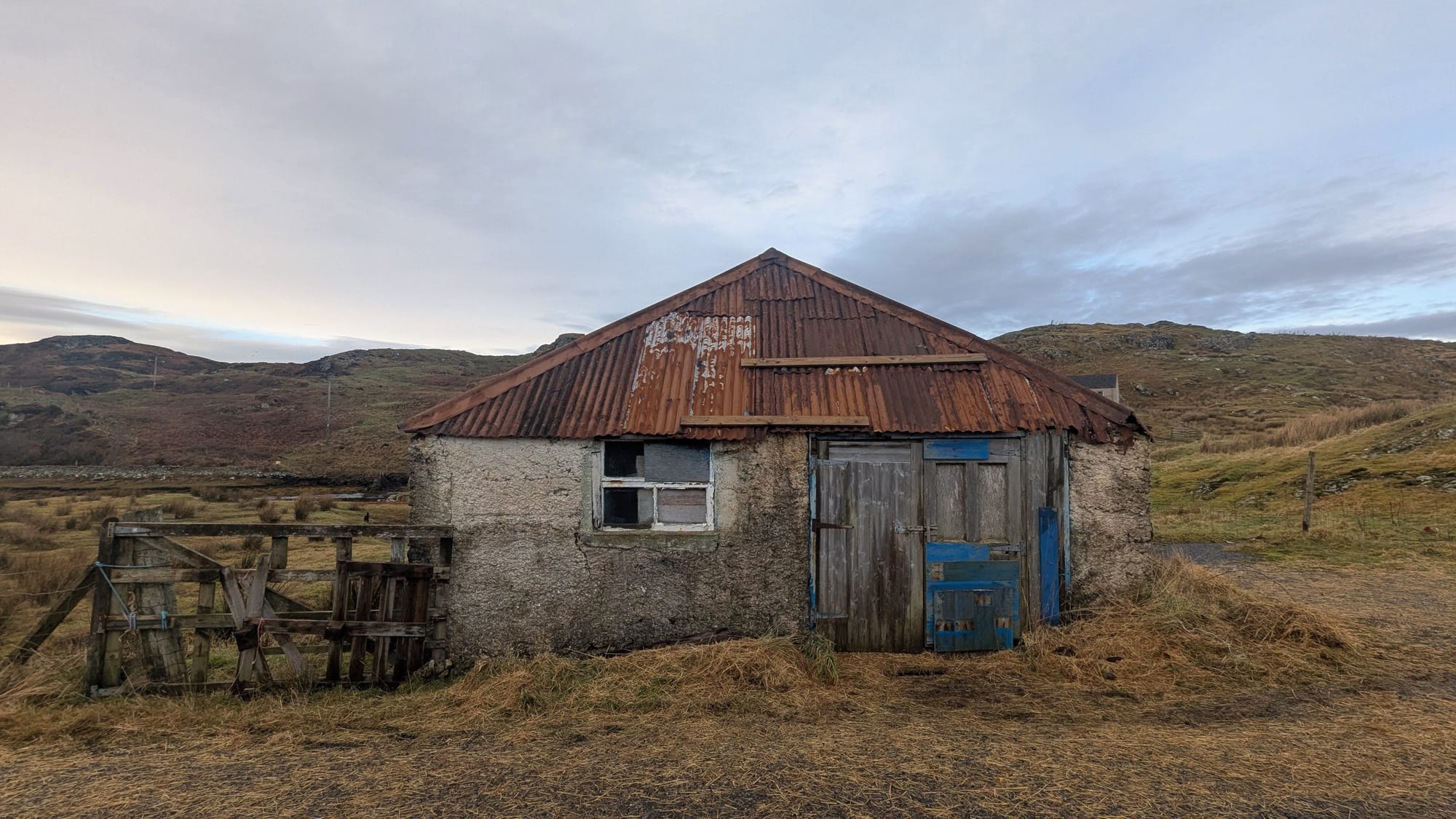
As I look to the year ahead, from what was to what will be, perhaps this shed Murdo uses extensively throughout the year for operations such as storing huge wool bags at shearing time, and stacked high of hay in winter, will be the last year as it looks now, with its leaky rusting tin roof and cracking walls. It’s been a talking point for a number of years to invest in a new one, but for now, let’s appreciate it in all its patchwork glory.